

How To Add Texture To Drawings In Photoshop
10 tips for better Photoshop textures
While 3D painting applications such every bit The Foundry'due south Mari are gradually replacing second software for texture painting, Photoshop however remains a stalwart for many, with its flexibility and advanced blending, painting and masking tools still offer a robust bundle for texture painters who have either not invested in a 3D painting packet all the same, or go along to utilise information technology alongside a 3D bundle.
Photoshop still has a few tricks upwardly its sleeve that the 3D options don't even so offer, especially when it comes to blending and adjusting layers in a texture. Additionally, the user-friendliness and familiarity of the application make information technology a proficient solution for things that need to exist done chop-chop and with minimal fuss.
This is a drove of essential techniques and tips for texture painters using Photoshop.
These represent some of its greatest strengths with regards to our particular bailiwick, and volition assistance to ameliorate your efficiency and texturing approach if you incorporate them into your workflow. Many of these are particularly notable for their non-subversive approach.
In other words, they utilize tools and techniques such equally aligning layers and layer masking, which offering a great fashion to change your document in a not-permanent manner, and then you lot tin can modify or fifty-fifty completely disengage your work at a later stage without excessive reworking.
This not-subversive workflow has e'er been one of Photoshop's greatest flexibilities when information technology comes to painting textures, and is a cadre reason why it remains an essential role of most texture painters' toolsets.
01. Customising your brushes
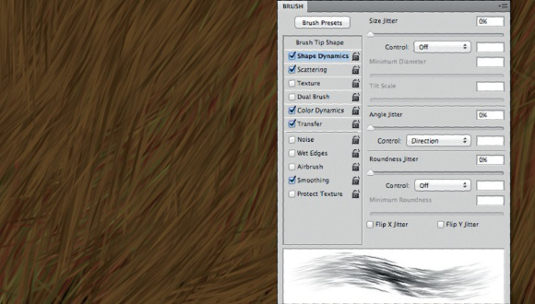
Photoshop's brush engine is an extremely robust and highly customisable one, offer a broad assortment of custom features that y'all can tailor to your particular mode of painting, or to achieve a specific outcome.
Creating brushes from whatever bitmap shape is as simple every bit selecting the shape and and then selecting Edit > Define Brush Preset, which creates a new castor in your current Brush palette from the selection.
Y'all tin can and so open the Brush Tool palette and add additional enhancements to it. Among the nearly useful of these are Angle Jitter, which causes the castor's shape to follow the management y'all're painting in – which is dandy for painting things like fur or stitching details on wear.
02. Good cloning techniques
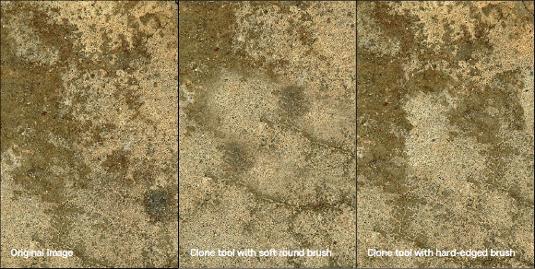
Everyone loves Photoshop's Clone Stamp tool, mostly commonly simply referred to every bit the Clone tool. Yet, there's a trick to using information technology in such a way as to forestall areas from becoming soft and blurred, and that's to use hard-edged, custom-shaped brushes.
Using Photoshop's default round brushes with soft edges, which is what many beginners use (and what y'all would use in many other circumstances), tends to upshot in soft patches in the texture, due to the soft edges of the cloned patch of pixels. Using a custom shaped, grungy type brush with hard edges volition reduce this soft consequence. Use custom-shaped brushes – round brushes don't look proficient when cloning with hard edges.
03. Utilise layer blend modes
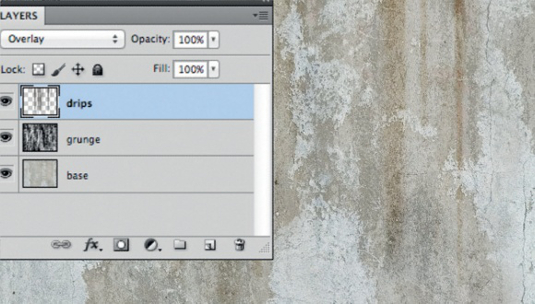
Using Photoshop's layer blend modes generally produces more than natural-looking results than simply lowering the opacity slider on a normal blended layer.
Modes such as Overlay, Multiply and Soft Light in particular are very useful for layering different photographic textures or painted layers with pleasing and organic-looking results, with each mode using the tonal values of the layer differently to produce the final result.
While these blending modes can be useful for all kinds of textures, they're particularly efficient at creating organic textures, because blending multiple layers on top of one some other produces a sense of substantial depth. This impression of depth is especially good for creating the look of living organic tissue.
04. Advanced blending
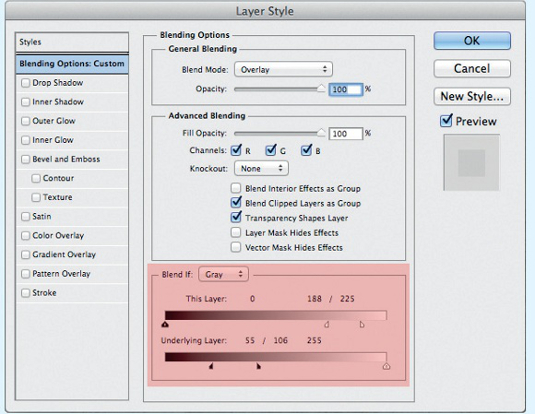
Subconscious abroad in the Layer Style dialog, under Blending Options, are the incredibly useful Blend If sliders. You'll find them under the Avant-garde Blending header.
You use these to alloy the layer according to either its own grey or RGB values, or the values of the layer beneath it, or both. They enable you to define value ranges that become transparent.
The sliders are particularly useful for dropping a photographic texture onto the one below it, such as a photo of some rust onto an underlying metal layer. Holding downwards [Alt] while adjusting a betoken on the slider splits information technology to allow a finer transition.
The dialog too offers a number of other options for expanding and fine-tuning layer blending.
05. Adjustment layers
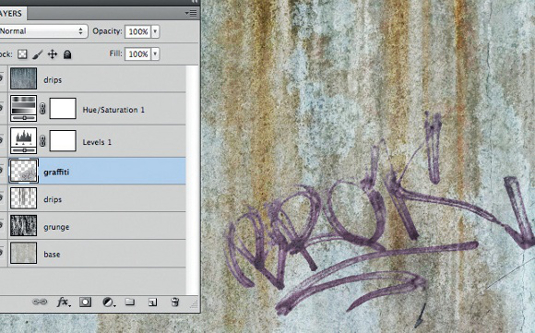
Aligning layers have long been one of Photoshop's greatest features, allowing you to alter the values of colours or tones of the layers beneath them without permanently applying the change to them.
Levels, Hue/Saturation and Color Rest are all of detail use to the texture painter, and when used in combination with the Blend If sliders (see tip four), they're a powerful fashion to selectively modify tones and colours without having to use layer masks.
For example, you can employ the Alloy If sliders to make the aligning layer affect simply the calorie-free pixels, or just the dark ones, or any of the red, greenish or bluish tones of the underlying layers.
06. Layer clipping
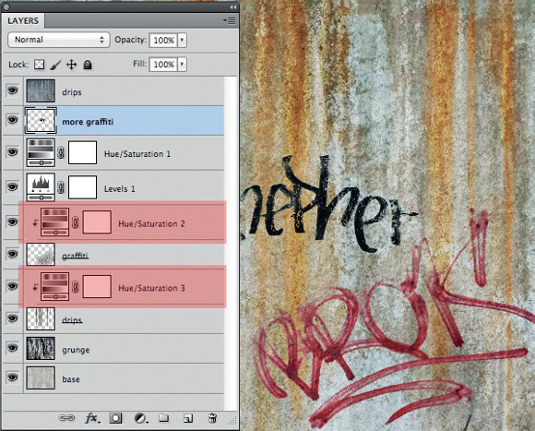
Another somewhat subconscious feature of layer usage is the ability to prune layers to others. Clipping an aligning layer to another layer will have the adjustment bear upon only that single layer, while clipping a regular layer to another will take the original layer'south visibility controlled past the layer to which information technology is clipped.
In other words, the visibility of the clipped layer volition depend upon the opacity of the pixels of the layer to which it is clipped. To clip a layer to some other, simply position one above the other, concord down [Alt], position your cursor between the ii layers in the Layers panel to get the prune choice, then click.
07. Layer masks
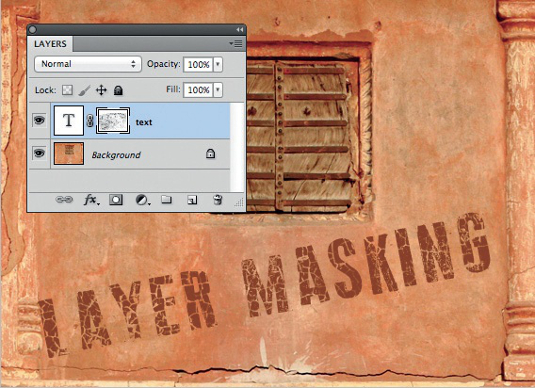
Masks are a nifty way to control the visibility of any layer. Due to their nature they are totally non-subversive, as you can use them to only 'hibernate' portions of a layer instead of permanently erasing those pixels.
They're especially useful in texturing when combined with grunge maps, which are essentially high-contrast images created from detailed photos. This allows you to blend layers together using highly detailed, organic masks that retain natural-looking shapes in their details.
Right-clicking a mask also allows you lot to open the Refine Mask dialog, which has numerous options for farther refining the results. These are likewise all non-destructive, because the pixels of the mask aren't permanently contradistinct past adjusting them.
08. Masked adjustments for removing lighting
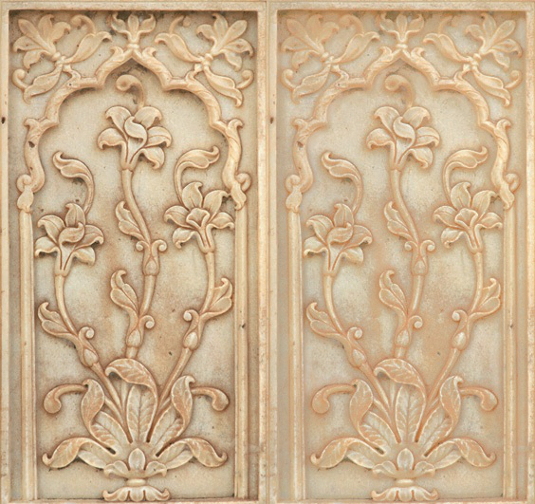
Using layer masks in conjunction with adjustment layers provides a highly flexible and effective fashion of painting low-cal out of photos and evening their tones, especially when using them to mask Levels and Hue/Saturation layers.
Again, this is a non-destructive technique, which allows for constant refinement or alteration at a later stage, and considering y'all're not painting onto the bodily pixels of the layer that's having its lighting removed, you end up with a cleaner, more controlled upshot.
We utilise this technique a lot when dealing with reference photos of actors, or set pieces that need to be projected onto their equivalent digital doubles in motion-picture show piece of work.
09. The High Pass filter
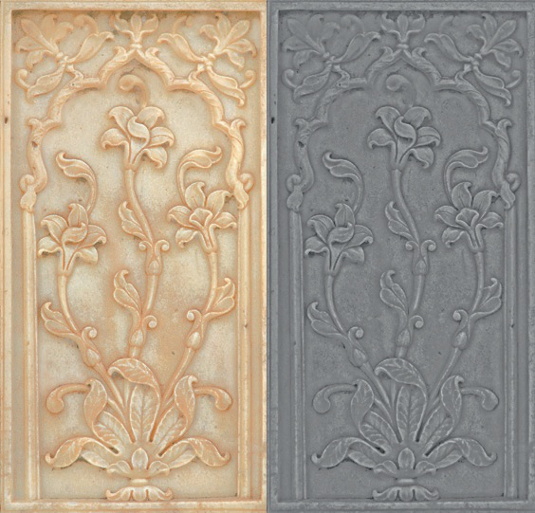
The High Pass filter, found under Filter > Other, is useful for 2 things in texturing: sharpening photo textures that are a little soft or need more than particular enhancement, and for creating quick crash-land maps.
For the sometime, simply indistinguishable the layer, desaturate information technology, and employ the High Pass filter with a relatively low radius (below five pixels), and and so blend information technology using Overlay above the original layer.
For crash-land maps, desaturating and applying Loftier Laissez passer at a relatively high pixel value is a quick fashion to get a good base prototype, considering the filter's effect is based on an average of l per cent grey; this is expert for bump maps considering 3D renderers utilise l per cent greyness as the median point for greyscale maps such every bit bump and specular.
10. Using opacity effectively
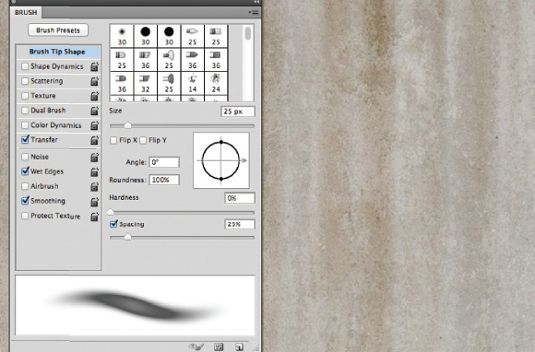
Peradventure one of the most crucial pieces of communication I can give about painting textures in Photoshop is to utilize a build-up approach – in other words, painting (whether it'due south bodily painting on layers or on layer masks) is often best accomplished by using low-opacity brushes to build upwards the tones slowly, as opposed to simply slapping opaque paint details onto a layer and trying to alloy them down.
Painting with a gentle approach is probable to yield the best results in virtually cases, especially when information technology comes to organic textures, but also when dealing with difficult surfaces.
Leigh van der Byl is a VFX texture painter in London. Her recent credits include X-Men First Form and the upcoming sci-fi thriller Gravity. She likewise scours the globe shooting landscape photography in cold, bleak environments
Master Photoshop! Discover 120 top Photoshop tutorials.
Related articles

Source: https://www.creativebloq.com/10-tips-better-photoshop-textures-3133109
Posted by: cartercamestich1950.blogspot.com
0 Response to "How To Add Texture To Drawings In Photoshop"
Post a Comment